
Understanding meditation and the benefits. Healthy Life Essex
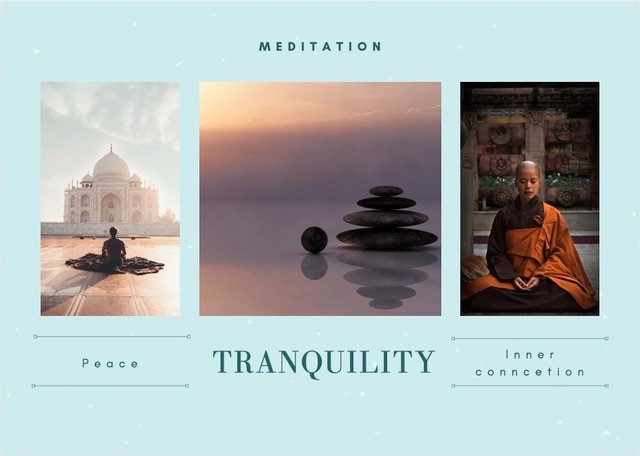
Understanding meditation, the origins, why it is beneficial, how it helps, and how to get started.
Understanding meditation and adopting a regular practice can be of great benefit to everyone. In order to increase your understanding of meditation Katarina Tilley, proprietor of Living in the Light will explain what meditation is, the origins of meditation, why it is beneficial to meditate, including research findings and background information. She will list some of its many benefits and explain how to practice meditation.
What is meditation?
Meditation is an ancient eastern spiritual practice and a process of stilling the mind, with the purpose of reaching your own source of being – your true Self. Your true Self is the source of infinite happiness.
There are many different types of meditation such as mindfulness meditation, mantra meditation, guided meditation, chakra meditation, transcendental meditation, Zen meditation, vipassana meditation and loving-kindness meditation and more. The common ground for all of these is the practice of focus and concentration on something specific, to that meditation.
Origins of meditation
The earliest evidence of the practice of meditation dates back to 5000 BCE, from the wall arts, in the Indian subcontinent, which depicts people seated in meditation postures. The Indian scriptures – the Vedas, contain the earliest written evidence of meditation practice and date back to 1500 BCE. From there it spread to various parts of the world.
Why meditate?
Changing our ‘set-point’ of happiness
Research has shown that regular meditators are happier people, as meditation alters the structure and function of the brain, within 8 weeks of daily practice.
Scientists have confirmed that each of us has a ‘set-point’ of happiness which is determined mostly by heredity and personality traits ingrained in us at a very young age. Whilst external events may affect this base level of happiness, those changes tend to be transient and for most people, their prevailing point of happiness remains the same throughout their lifetime.
Yet science has now proven that meditation is the only thing that can permanently change your ‘emotional set point’. This means that through meditation, you can change the level of happiness that you were meant to experience in your life.
Finding inner peace
Also, we live in very busy and stressful times and most people find it hard to relax and as such lack inner peace. Most people’s life seems to be in a constant rush. This is not a healthy way of living. By being externally focused you are rarely connected with your inner being – your true Self. Even if your body is sitting, your mind is ruminating, thinking about so many things, thinking about the past and worrying about the future. You are then not in harmony with yourself.
It is a fact that the mind is wayward and never stands still. We may be able to do many things, but we have difficulty in establishing control over our mind. In fact, our mind controls us. This is really not good news because that means that, rather than living life from your true Self, you are living life from your ego and the ego is not your friend. The ego is the loveless voice within you and that causes you to suffer by making you appear separate from others.
When you appear separate from others, then problems arise, because you will need to protect, defend and improve the ‘I’ from ‘others’. Also, when there is a ’me’, then ‘my’ arises. The feeling of ‘my’ causes attachment and expectations and this causes much suffering, as people don’t always act according to your wishes. This leads to disappointment or anger and so it goes. I am sure that you are familiar with all that is being said here, as this is the story of humanity. Yet through meditation, we can slowly gain control over our mind.
Meditation is a way to slow down your breath and when you slow down your breath, then you slow down the movement of thoughts in your mind and this in real terms means greater inner peace. Meditation is the answer to manage the river of life, which flows in its own way.
Understanding the benefits of meditation can be the beginning of a great gift.
Finding acceptance
As you may have noticed, we only have limited control over the events in our lives. Meditation can help us accept life as it comes. By meditating you may be able to accept the constant changes of life, with greater ease. Meditation can calm your emotions, so that you are able to respond instead of always reacting, in the difficult moments of your life. This will improve the quality of your life.
Living in the moment
In addition, life actually takes place in the present moment and yet we are stuck in the mind. This means that we are not making the most of our life and life passes by, without our awareness. By learning to meditate you will be able to live with greater awareness of the present moment and as such enjoy life more. Think about when you are on holiday, you seem to be living every moment of the day fully. Why? Because you are fully present. Imagine if you learned to be fully present in your life…
Self-awareness
Through meditation, we can perhaps for the first time come to know what is happening within us. Knowing what is happening within you is very important because it can enable you to notice the originating point of inner changes i.e. your thoughts starting to become negative, negative emotions arising, your mood sinking etc. this allows you to address your situation, at an early stage. By being the witness to your thoughts, emotions, sensations, beliefs etc. you can take a distance from them and that changes your perspective.
Your thoughts create your emotions and your emotions affect your physical body. In meditation, you can become aware of your thoughts, observe your breath, feel your emotions and the sensations arising within your body. Meditation increases objectivity and, in this way, you can become more detached about the things that bother you. Meditation can get to the root of an apparent problem. When the mind is relaxed and empty, the answer to your ‘problem’ can pop up into your mind. Meditation can provide long-term solutions.
Meditation can also increase your awareness of your beliefs, your conditioning and the limiting patterns of your mind, that hold you back. By discovering your mental patterns, you can let go of all that is not true and come to realise that you are not what you thought we were. You are in fact, the witness of all that occurs in your life.
 Benefits of meditation
The benefits of meditation are numerous. Here you will find some of them:
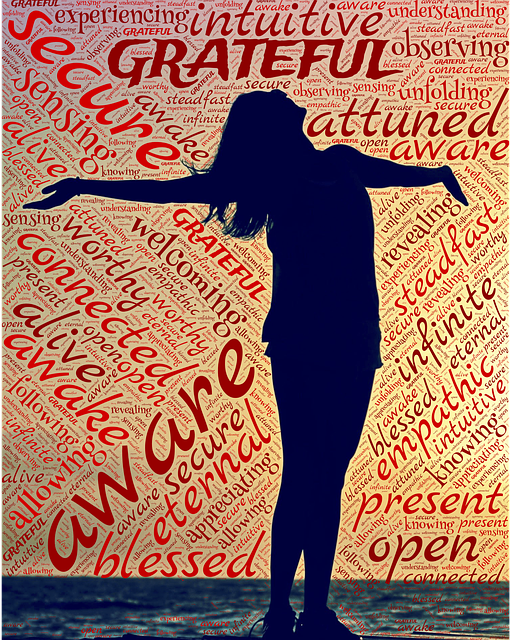
Increased clarity, concentration, creativity and productivity. Reduction in depression, fear and anxiety. Relaxation, release of stress and tension. Greater harmony, calmness and inner peace.
In addition, it can slow down the heartbeat, deepen the breath and lower blood pressure. Furthermore, it can increase appreciation, gratitude, love and compassion. You can gain deeper contentment, presence and equanimity of mind. Additional benefits are increased inner connection, insight and intuition. A greater sense of meaning and purpose. It can also assist you in progressively move you closer to your true Self and bring about spiritual awakening.
The practice
Find a quiet spot in your house, where you will not be disturbed. Keep that area clutter-free. The most common way to practice meditation is that you would sit with your eyes closed or half-closed. Your legs crossed or sitting on a chair, without leaning back, if possible, if not, then sitting normally on a chair. Hands are placed on your thighs with the palms uppermost and keeping your spine straight. Then you would begin to practice the meditation of your choice e.g. mindfulness of breath meditation. In this case, you would become aware of your breath and follow that breath with your awareness, for the duration of the meditation.
The best time for meditation is early morning or late night, when the world is quiet, as you gain greater concentration at those times. If you are unable to meditate at those times, then find a time that suits you and you know that you will not be disturbed.
You will find various visualisations on the Healthy Life Essex website.
In conclusion, it is clear that understanding and practicing meditation is invaluable in today’s modern stressful living. It enables you to relax your body, to calm your mind, manage your emotions, so that you can respond to life’s circumstances in a balanced way. It increases your awareness, including awareness of your ‘inner world’. Meditation helps you to live life in the present moment, which is the only reality there is. Meditation can alter the structure and function of your brain for the better and give you a greater perspective on life and increase the quality of life. It also slowly awakens you to the truth of your being.


Katarina Tilley, founder of Living in the Light, based in Little Clacton near Colchester offers 8-week mindfulness meditation courses, meditation teacher training, monthly meditation groups, meditation retreats, and online meditation training and support.
For further information, please do not hesitate to contact Katarina on 07707 207290 or visit www.katarinatilley.co.uk
Picture credits:
Royalty-free heading picture from pixabay.com (centre image) and Pexels.com (the other two images)
Purple meditation image by Okan Caliskan from Pixabay
Gratitude image by John Hain from Pixabay