
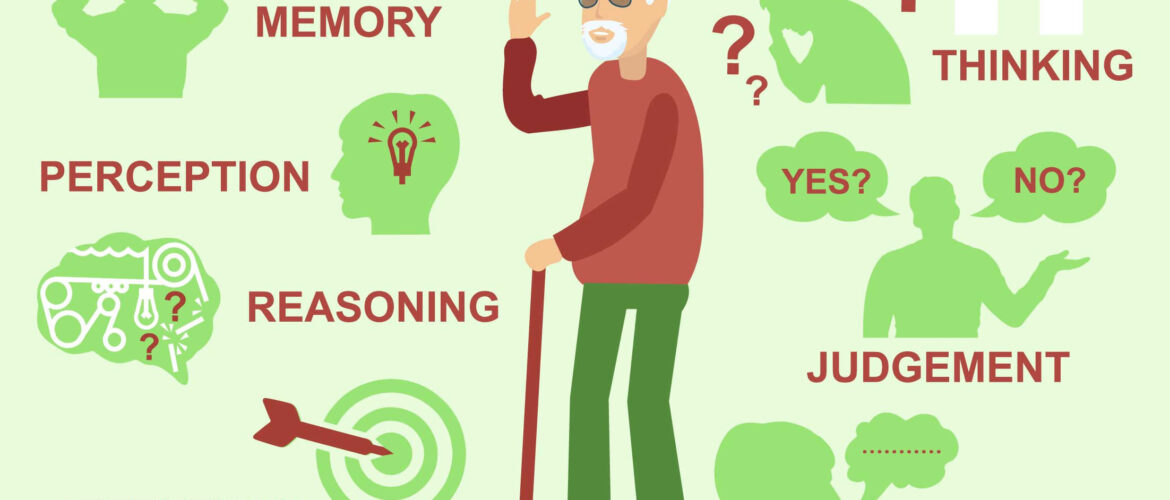
An international conference sees new evidence of four simple lifestyle changes that can halve the risk of dementia
By Patrick Holford, nutrition and mental health expert and Founder of Food for the Brain
There has been much talk in the news recently about the drug Lecanemab – hailed as a ‘new hope’ for Alzheimer’s disease. In fact, while statistically significant, the results are clinically meaningless – less than half a point drop in an 18-point Clinical Dementia Rating.
Then there are the adverse effects – with one-fifth of participants having brain swelling or bleeding. This is not so much the ‘new hope’ for Alzheimer’s but the new hype. In real terms, the risks and costs far outweigh the benefits.
Also recently, a global conference of leading world experts in dementia prevention, organised by the charitable foundation Food for the Brain, identified four easy ways that could reduce the risk of dementia by half, and eight options that could cut your risk by two-thirds. This brings to mind the old adage about prevention being better than cure.
Here are the four ways that new research showed can cut your risk of dementia in half, as presented at the Alzheimer’s Prevention Conference.
-
Supplementing omega-3 fish oils.
According to a new study of almost half a million participants of the UK’s Biobank supplementing fish oils cuts dementia risk.[1] This new research was presented at the conference by China’s leading dementia prevention expert from Shanghai’s Fudan University, Professor Jin-Tai Yu:
“Our current research, using data from the UK BioBank, shows that having higher blood levels of omega-3, and supplementing fish oils, is associated with less risk of dementia.”
Other studies reported by Dr Simon Dyall, clinical neuroscientist at the University of Roehampton, showed that a higher intake of fish was associated with cutting the risk of Alzheimer’s disease by a third.[2]
“Half your brain is fat, and a type of omega- 3 called DHA has a very important role in the communication between brain cells.” said Dyall.
-
B Vitamins
According to Professor Yu, another very promising prevention treatment is B vitamins.[3] He explains that:
“Lowering blood homocysteine levels, an established indicator of Alzheimer’s risk, with B vitamins is a most promising treatment.”
Raised homocysteine is found in one in two people over 70.
In a trial at Oxford University by Professor David Smith, who was presenting at the conference, giving high-dose B vitamins versus placebos, resulted in 52% less brain shrinkage and little further memory loss.[4]
Combining omega-3 and vitamin B. The discovery of the synergistic role of omega-3 led the Oxford Professor to reanalyse blood samples taken at the start of the trial for omega-3. They found that those with low omega-3 DHA blood levels, one of the main nutrients found in fish and fish oil supplements, had no benefit from the B vitamins, while those with high omega-3 DHA had 73% less shrinkage and almost nine times less shrinkage of the Alzheimer’s related areas of the brain.[5]
Furthermore, another study in Sweden, that had given omega-3 fish oil supplements, reanalysed their results and found those with good B vitamin status substantially reduced their dementia risk.[6]
A third study in the US, called ‘B proof’, that had given B vitamins with marginal improvements, reanalysed their results and found that those with higher omega-3 levels also had a much greater improvement.[7]
“Research shows that you get impressive results if you give omega-3 and B vitamins together rather than on their own.” Says Professor Smith.
While US National Institutes of Health researchers attributed 22% risk to a lack of seafood or omega-3 and another 22% to the B vitamin factor they also attributed 32% of the risk to an inactive lifestyle.[8]
-
Keeping your brain active
Another expert at the conference, Tommy Wood, Assistant Professor at the University of Washington, showed that your muscle mass predicts brain volume.
“Exercise, especially resistance exercise, is important because it makes the brain do things that keep it healthy, such as growth and repair.” he says. “When they aren’t stimulated, the health of brain tissues deteriorates, with a knock-on effect on memory and thinking.”
And it’s not just physical exercise that does this, we also benefit from the mental exercise involved in activities like solving puzzles or learning a new language.
“For many people, the worst thing they can do for their brain is to retire”, says Wood. “They lose much of the stimulation that kept it healthy.”
-
Sugar levels at age 35 predict Alzheimer’s risk later in life
While it has long been known that diabetics have a much higher risk for dementia, a recent study at Boston University School of Medicine, found that higher blood sugar levels at age 35, but still in the ‘normal’ non-diabetic range, predict Alzheimer’s later in life.[9] Talking at the conference Professor Robert Lustig, from the University of California, said:
”A high level of sugar and insulin in the blood – linked with a high carbohydrate diet – is definitely a driver for Alzheimer’s.”
The conference identified eight domains of risk, in other words, four more actions you can take to reduce your risk of dementia: eating antioxidants from fruit and veg; having a healthy gut; sleeping well; and controlling stress.
Targeting all eight risk factors earlier in life may reduce risk the risk of dementia by two-thirds.
But how do you know what your risk is and what and how to change to reduce your risk? That’s what the charity, the Food for the Brain Foundation has been working on for a decade.
On their website, you can do a free Cognitive Function Test. Almost 380,000 people have taken the test and, according to research by NHS and University College London researchers, 88% find it useful. You then complete a questionnaire that works out your future dementia risk index. It also tells you exactly what’s driving your risk up and what to do about it.
Then you can join COGNITION, which is a personalized, interactive brain upgrade programme that helps you make simple changes to dementia-proof your diet and lifestyle.
If there are simple changes can halve the risk of dementia, as individuals we should certainly try to make those changes as soon as possible.
Additionally, there needs to be a greater emphasis on these changes to halve the risk of dementia within the medical profession, rather than a focus on new drugs that are clearly not the best solution.
ABOUT THE AUTHOR:
 Patrick Holford is a nutrition and mental health expert and Founder of the Institute for Optimum Nutrition Advice, VitaminC4Covid, and the charitable Food for the Brain Foundation, which studies how to prevent Alzheimer’s Disease. Patrick reads thousands of studies a year assimilating the latest health breakthroughs and turn them into practical advice to make it easy for everyone to live a healthy life. He is author of over 45 health books translated into 30 languages. https://www.patrickholford.com/
About FoodForTheBrain.org
The Food for the Brain Foundation is a UK-based charitable foundation that developed a fully validated Cognitive Function Test in 2012 and has so far tested 380,000 people. The test is available at foodforthebrain.org
STUDY REFERENCES
[1] Yu JT et al, Circulating polyunsaturated fatty acids, fish oil supplementation, and risk of incident dementia: a prospective cohort study of 440,750 participants, BMC medicine (pending publication) [2] Wu S, Ding Y, Wu F, Li R, Hou J, Mao P. Omega-3 fatty acids intake and risks of dementia and Alzheimer’s disease: a meta-analysis. Neurosci Biobehav Rev. 2015 Jan;48:1-9. doi: 10.1016/j.neubiorev.2014.11.008. Epub 2014 Nov 21. PMID: 25446949. [3] Yu JT, Xu W, Tan CC, Andrieu S, Suckling J, Evangelou E, Pan A, Zhang C, Jia J, Feng L, Kua EH, Wang YJ, Wang HF, Tan MS, Li JQ, Hou XH, Wan Y, Tan L, Mok V, Tan L, Dong Q, Touchon J, Gauthier S, Aisen PS, Vellas B. Evidence-based prevention of Alzheimer’s disease: systematic review and meta-analysis of 243 observational prospective studies and 153 randomised controlled trials. J Neurol Neurosurg Psychiatry. 2020 Nov;91(11):1201-1209. doi: 10.1136/jnnp-2019-321913. Epub 2020 Jul 20. PMID: 32690803; PMCID: PMC7569385. [4] Smith, A.D. et al., ‘Homocysteine-lowering by B vitamins slows the rate of accelerated brain atrophy in mild cognitive impairment: a randomized controlled trial’, Public Library of Science ONE, 5(9) (2010) [5] Jernerén F, Elshorbagy AK, Oulhaj A, Smith SM, Refsum H, Smith AD (2015). Brain atrophy in cognitively impaired elderly: the importance of long-chain ω-3 fatty acids and B vitamin status in a randomized controlled trial. Am J Clin Nutr. 2015 Jul;102(1):215-21 [6] Jernerén F, Cederholm T, Refsum H, Smith AD, Turner C, Palmblad J, Eriksdotter M, Hjorth E, Faxen-Irving G, Wahlund LO, Schultzberg M, Basun H, Freund-Levi Y. Homocysteine Status Modifies the Treatment Effect of Omega-3 Fatty Acids on Cognition in a Randomized Clinical Trial in Mild to Moderate Alzheimer’s Disease: The OmegAD Study. J Alzheimers Dis. 2019;69(1):189-197. doi: 10.3233/JAD-181148. PMID: 30958356. [7] van Soest, A.P.M., van de Rest, O., Witkamp, R.F. et al. DHA status influences effects of B-vitamin supplementation on cognitive ageing: a post-hoc analysis of the B-proof trial. Eur J Nutr (2022). https://doi.org/10.1007/s00394-022-02924-w [8] Beydoun MA, Beydoun HA, Gamaldo AA, Teel A, Zonderman AB, Wang Y. Epidemiologic studies of modifiable factors associated with cognition and dementia: systematic review and meta-analysis. BMC Public Health. 2014 Jun 24;14:643. doi: 10.1186/1471-2458-14-643. PMID: 24962204; PMCID: PMC4099157. [9] Zhang X, Tong T, Chang A, Ang TFA, Tao Q, Auerbach S, Devine S, Qiu WQ, Mez J, Massaro J, Lunetta KL, Au R, Farrer LA. Midlife lipid and glucose levels are associated with Alzheimer’s disease. Alzheimers Dement. 2022 . doi: 10.1002/alz.12641. Epub ahead of print. PMID: 35319157.