
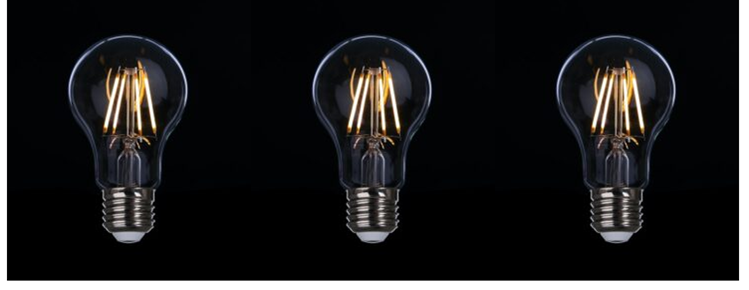
Have you switched to LED lighting yet?
While healthy living might generally focus on nutrition, exercise, and managing mental health issues, at Healthy Life Essex we have always adopted a more holistic approach to wellbeing. Climate change, for example, is not just a major catastrophe about to affect the lives of all of us in the future, it is impacting the way we live now. It is affecting every living thing on this planet we call our home. And while there are lots of big actions we can take such as going vegan (or at least dramatically reducing the amount of meat we eat) and avoiding foreign travel, we must not forget the small things we can do that cumulatively make a difference. That’s why in this article we are focusing on switching to LED lighting.
The history of light bulbs
The light bulbs older readers will remember, and perhaps may still be using, are the incandescent type of lightbulbs that Thomas Edison began to market in 1880.
In 2009, the UK Government began a rollout of halogen lamps, which are also incandescent lightbulbs but using a process which prolonged the life of the filament and therefore the bulb. These bulbs were slightly more energy efficient than existing bulbs and, because of this, the rollout was supported by many thousands of bulbs being provided free of charge to consumers.
And yet despite all the hype, less than ten years later these halogen bulbs apart from a few specialist exceptions, were banned. Let’s just clarify ‘banned’ in this instance: the ban is intended to stop new halogen bulbs coming into the market, so householders are not obliged to change them, and retailers can still sell them.
The main reason halogen light bulbs have been banned is because they are not as eco-efficient as alternatives such as LED (light emitting diode) bulbs. Whilst this type of bulb was already available when halogens were introduced, they were extremely expensive, options were limited, and none were dimmable. But that has all changed in later years.
There are also other potential risks with halogen lamps, including the potential for burns and even causing fires because the lamps do get very hot when left on for long periods. Halogen lamps also emit a level of UV rays when turned on and therefore, if you sit within direct exposure to the bulb, you could risk ‘sun burn!’
Although LED lamps are still more expensive to purchase, they are much most cost-effective longer term. Let’s look at some of the other benefits of switching to LED bulbs:
The benefits of switching to LED bulbs
- LEDs are extremely energy efficient. Depending on which lights are currently used, you could be saving up to 90% energy usage.
- An average LED lasts 50,000 to 100,000 hours, 40 times as long as the average incandescent bulb.
- LEDs are safer because they do not get hot and, because they use less energy, can operate effectively on low voltage systems.
- LEDs have a better ability to reveal the actual colour of objects.
- Because they are so small, LED lights now offer a tremendous range of design applications.
- Many LEDs are now have dimming capability
- LEDs turn on and off instantly: there is no warm-up period.
LEDs v fluorescent tube lights
Fluorescent tube lights are very harmful to the environment, as they contain toxic chemicals and elements, including mercury. When the bulbs are disposed of at landfill sites, these chemicals can leak out into the environment and drastically affect wildlife and the planet.
LED lights, however, contain no hazardous materials (so they are obviously much safer for the environment) and they do not require specialist disposal.
Commercial LED lighting
Apart from use in, say, garages and sheds, fluorescent tube lighting is little used in domestic settings. However, for many years they have been the mainstay of commercial lighting.
But unsurprisingly, there is now a big move for businesses of all types to change to LED lighting to reduce their carbon footprint.
Many eco lighting specialists can help businesses become #LEDready by conducting a no-obligation lighting assessment which will calculate current financial and carbon costs and compare against a replacement LED system.
Not only will such surveys show how LED replacement lighting will benefit companies financially and ecologically, but how LED lighting is better for the wellbeing and health and safety of staff.
Have you switched to LED lighting yet? Whether for your own home or perhaps you also have business premises, do not delay in changing to a form of lighting that is better for your pocket and better for the environment.
Image credit:
Photo by LED Supermarket from Pexels