
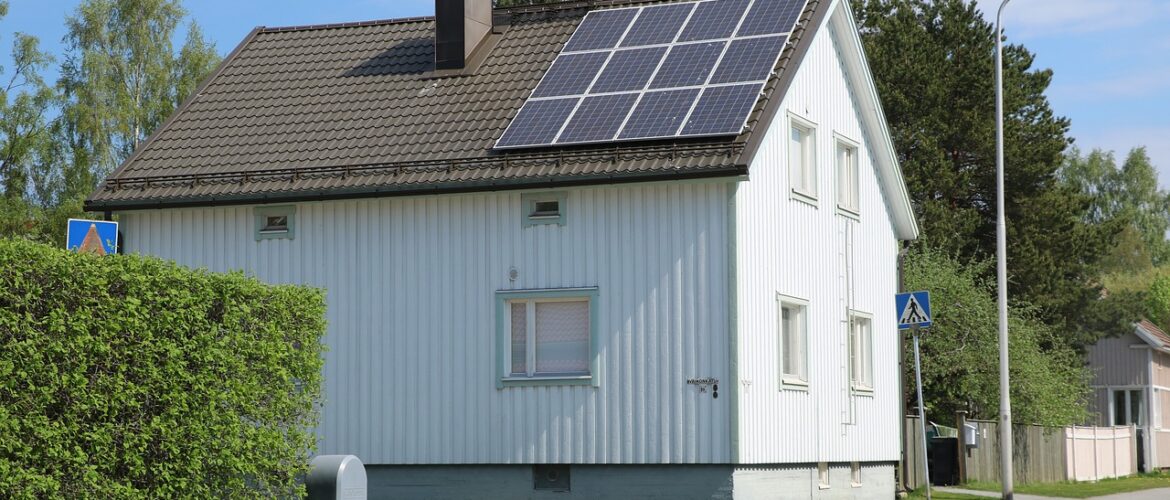
Save the Earth, Save Money: 6 ways solar power can benefit the environment
Most people now accept that the drastic and sharp spike in atmospheric carbon dioxide levels since 1950 is due to the rapid and quite amazing boom of industrialisation across the planet. In other words, mankind is responsible for current levels of CO2 emissions and Climate Change. Across the globe, countries are now considering how they can tackle these challenges. Stanford University Professor Mark Z. Jacobson envisions a world operating on 100 percent renewable energy by 2050: a wind, water and solar-powered world. So, let’s take a look at the benefits of solar power for the individual.
But first, let’s also consider how we have arrived at this crucial point in history.
Business innovation has yielded wonderful economic results for many years and humankind has, in general, adopted the apparent benefits of this new high-tech world without a thought for the long-term implications. The consumer-driven demand for a comfortable lifestyle with the latest mod cons and gadgets has increased CO2 emissions exponentially leading to harmful and accelerated global warming, climate change, and, ultimately, a dubious human future. It’s easy to blame governments, but we have all played a part in the catastrophic results that are now so blatantly obvious.
Yes, the earth’s climate does change in cycles. In the last 650,000 years, there have been seven cycles of glacial advance and retreat. The last major ice age ended about 11,700 years ago, albeit there have been many mini ice ages in more recent times. But invariably these cyclical changes are so slow that creatures on this earth, including humans, have time to adapt. But change is happening at such a rate, and the world is so densely populated, we can’t adapt sufficiently and now have limited time to reverse the current trajectory.
It’s important, then, to remember that we can all play our part to create a cleaner, greener future for the generations to come. As individuals, there is a great deal we can do to make a substantial difference including, for example, adopting a plant-based diet and reducing our levels of consumerism. Do you really need that new jumper? Do you really need the latest mobile phone?
But, as we have already mentioned, we are going to look at the benefits of solar power as that is also an option worth considering.
Solar energy is one of the biggest and most effective kinds of renewable energy in the world. In simple terms, solar energy harvests the natural power of the sun to create electricity to heat, light and/or provide water for homes and businesses. And because solar power is not dependent on burning fossil fuels, solar energy does not create greenhouse gases for energy production.
We should remember that production of solar equipment does produce CO2 emissions, but those emissions are considered very low when spread across the normal lifetime of the systems.
Solar energy solutions provide a variety of amazing benefits to you and the planet; and they’re something you can implement for tomorrow, today. So, keep reading to discover six benefits of solar power.
Benefit #1 — Reduced carbon footprint
The dictionary definition of a carbon footprint is:
“The amount of carbon dioxide released into the atmosphere as a result of the activities of a particular individual, organisation or community.”
Releasing carbon dioxide (CO2) into the atmosphere is causing an increasingly warm earth. Why? Because CO2, in excess, fills the atmosphere and creates a barrier or layer between space above and all of us below. In effect, this barrier then traps the planet’s heat. And when heat can’t escape, it can cause a lot of damage. For instance, as temperatures increase, we see a variety of negative effects, including rising sea levels, shrinking ice caps and glaciers, and more. This is known as the greenhouse effect.
Thankfully, solar power doesn’t emit harmful CO2 and gasses. It’s an incredibly clean and renewable power source and, ultimately, a powerful solution to one of our biggest challenges today.
Benefit #2 — Health benefits of reduced air pollution
Not only is excessive CO2 bad for the planet, but the air pollution it causes is extremely bad for human health.
Air pollution has been linked to a variety of health conditions, including asthma and many other lung-related complications. Most recently, in a landmark case in the UK, the Southwark Coroner’s Court found that air pollution “made a material contribution” to the death of a nine-year-old girl who lived near the South Circular Road in Lewisham, south-east London. Ella Adoo-Kissi-Debrah died in 2013 after suffering multiple asthma-induced seizures. The coroner said:
“I will conclude that Ella died of asthma, contributed to by exposure to excessive air pollution.”
In the era of COVID and beyond, it will be more important than ever to choose and implement renewable energy sources that protect our planet and our bodies.
By using solar power, you’re helping to protect your health and the health of those around you!
Benefit #3 — Reduced heating and water costs
The initial installation of solar panels can be costly but should be considered as a long-term investment.
In the UK, the average payback period for solar panels is 10 years: slightly less in the south and slightly more in the north due to different levels of sunshine. But each installation is different, so it is extremely important to use a registered installer and ensure that they provide accurate payback calculations before you make a final decision.
Additionally, as with any major investment, you should ensure you have an appropriate warranty for your system. Solar systems have low maintenance costs and generally a normal warranty of 25 years, but will potentially last for up to 50 years if serviced at least every 3 years by a certified installer. The inverter, however, the piece of electrical equipment that converts the energy to an AC current, will probably need to be changed after 15/20 years. (Inverters have shorter warranties, usually 10-12 years with the option of an extension.)
As many governments across the world are encouraging the installation of solar panels, there are also many grants available. Currently, in England, the Green Homes Grant includes options for solar thermal water heating, albeit not solar pv. But that, of course, could change.
There are often additional incentives for businesses and educational establishments to install solar panels, particularly if they have expansive buildings with flat roofs. Contact #ORBMember Energyst Consulting for more information.
In other countries including the US, grants might be in the form of tax incentives as Blue Raven Solar based in Indianapolis explains: https://blueravensolar.com/indiana/indianapolis/
Benefit #4 — Conservation of natural resources
Energy companies commonly use fossil fuels like oil, natural gas, and coal to power our homes, cities, and vehicles. But these fossil fuels are “non-renewable” meaning, quite simply, supplies will run out! So not only is the use of these fuels inherently bad for the planet and for our health, but supplies are actually limited.
In order to maintain supplies or oil, gas and coal, big energy companies are increasingly adopting practices such as fracking that concern many people:
Shale gas is a natural gas what is trapped in certain rock formations. Shale gas is extracted by fracking which is considered by many to be a potential environmental disaster. Fracking was supported by the current Government but it appears there may have been a U-turn due to strong public opposition and research that suggests shale gas is one of the least sustainable ways to produce electricity
Focusing on clean renewable energy sources such as wind, water, and solar power should surely be the preferred option of individuals, organisations and governments!
Individuals and organisations can generally choose an energy provider that offers renewable energy options, particularly for electricity. However, the renewable energy infrastructure is currently not large enough to provide all the power the UK currently uses, so it makes sense to consider producing our own renewable energy through options such as solar panels.
Benefit #5 — Reduced water usage
Most common methods for creating power and energy (for cities, homes, neighbourhoods, etc.) require near-endless gallons of water.
But solar power? Solar power doesn’t require any water at all. It’s an H20-free source of energy and, as a result, helps conserve our national and global supplies of water.
Benefit #6 — A more protected planet
While solar power offers and provides a host of micro-benefits to our daily lives and rhythms, it’s also important to zoom out and take a look at the wider benefit of installing solar energy — namely, a more protected planet.
When we limit the use of fossil fuels, reduce water usage, CO2 emissions, and air pollution, we subsequently create a healthier earth — a place where fish can swim, animals can explore, and we humans can breathe easily for centuries to come.
Invest in the future with solar power
When you invest in solar power, you’re lowering man-made stress on the planet and helping to create a better tomorrow for your children and your children’s children. You’re reducing harmful emissions, saving water, and nurturing a healthier planet.
Be a part of the change and ensure you adopt the benefits of solar power!