
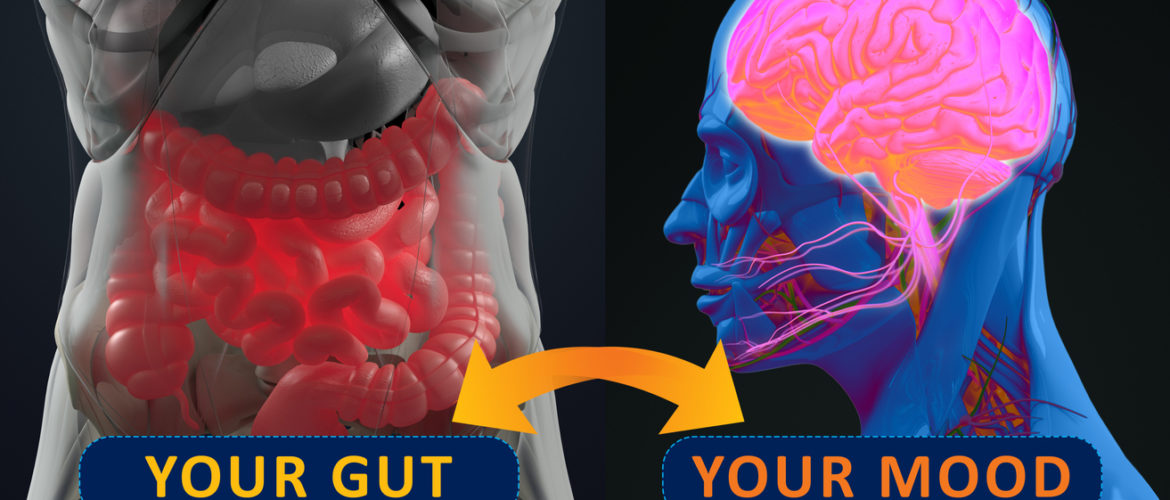
Marlene Watson-Tara writes about the gut-brain connection and the significance of diet on a person’s mental health.
Marlene Watson-Tara is author of Go Vegan and co-founder of the Human Ecology Project
Mental health awareness is an issue regularly reported in the media. It is accepted that there is no one cause of mental illness and often the underlying reasons are unclear. Certain stressors such as losing a loved one, diagnosis of terminal illness, the loss of a home, job or a multitude of challenges that people face daily, can trigger an illness in a person who is susceptible to mental health problems. Severe psychological trauma suffered as a child such as emotional, physical, or sexual abuse, or witnessing a horrific incident, can often surface as mental illness many years later. It is difficult to fully understand why some people are more susceptible to mental health issues than others.
But two factors that play a significant role in the stability of our mental health are often ignored: the gut-brain connection and, therefore, the food we eat.
The Gut-Brain connection: serotonin – ‘the happy chemical’
Connecting the gut and brain to mental health is a fascinating area of research. The gut-brain connection is now recognised as a basic tenet of physiology and medicine. There is no shortage of evidence that what we eat is an important factor in a variety of neurological diseases.
What has been discovered is that gut bacteria play a significant role in psychology and behaviour as well as digestion.
The human gut contains almost 95% of the body’s serotonin, “the happy chemical” neurotransmitter that helps regulate mood, social behaviour, sleep, memory, and sexual desire. A lack of serotonin is an important factor in depression. Production of this essential chemical depends on the micro-organisms in the gut that are nourished by our diet. This has been an important discovery in understanding mental illness.
According to the World Health Organization, more than 264 million people of all ages suffer from depression. It is one of the leading causes of disability worldwide and a major contributor to the global burden of disease. Our physical condition can either help us manage our mental state or exacerbate the stress we encounter. The key to this mystery may be inflammation.
The Gut-Brain connection: gut inflammation
The relationship between mental health and gut inflammation was first noted in 1887. The doctor who discovered this relationship was Julius Wager-Jauregg, the only psychiatrist to have ever won the Nobel Prize. There have been subsequent studies confirming this.
The modern diet is pro-inflammatory. This inflammation directly irritates the vagus nerve, the direct connection between the gut and the brain.
The resulting mechanism has been detailed in many studies, including the Journal of Neuroscience Research, and the outcomes are the same. Our gut biome (the colonies of microorganisms that live in the gut) can be contaminated by the food we eat. The prime culprits are found in the modern mainstream diet.
Fighting inflammation with plant-based nutrition
The foods which most exacerbate inflammation are those that are mostly present in processed foods. These include simple sugars, fructose, dairy foods, eggs, alcohol, meat, hydrogenated fats, palm oil and some fruits and vegetables such as tomato and pineapple. These foods encourage inflammation.
Using data from two large studies, Danish researchers have found that higher blood levels of C-reactive protein (CRP) are associated with a greater risk of psychological stress and clinical depression. Eating a diet with significant amounts of animal protein can cause a burst of inflammation that could increase symptoms in someone already suffering from depression. Eating a diet rich in antioxidants, a plant-based diet, has a profound benefit in stress reduction.
A plant-based diet can cut the C-reactive protein by 30% within two weeks because of the anti-inflammatory properties of antioxidants. Eating a diverse and balanced vegan diet can produce profound changes in the gut biome within days.
What a wonderful thing that a diet that can produce physical health can also benefit mental stability.
Marlene is a long time vegan, lover of animals, nature and life and passionate about human ecology. Her dietary philosophy draws from the fields of Macrobiotic Nutrition, her studies in Traditional Chinese Medicine and her certification in plant-based nutrition.

Author of the best-selling book ‘Macrobiotics for all Seasons’ and her most recent book ‘Go Vegan’ is available worldwide.

Marlene teaches alongside her husband Bill Tara and have graduates of their MACROVegan Health Coach Programme in 27 countries.
Along with Bill Tara, Marlene runs the “Human Ecology Project” which offers a new approach to the human diet and well-being.
The topic of nutrition has become a confusing landscape of cultural myth and vested interest. Their holistic approach to nutrition addresses not only the physical requirements for vibrant health but also the ethical, environmental and social impact of what we eat.
A combined 90 years of experience working as health consultants, authors and teachers, ensures that their approach is based on solid principles that takes into account both modern science, ancient wisdom and human ecology. The Human Ecology Project runs cooking and nutrition courses, provides health counselling and is a vehicle for the couple’s life beliefs.
Image credit: ChrisChrisW
8 Comments
[…] has also written Mental Health and the Gut-Brain Connection and Waster Fasting: a Powerful Way to Initiate Healing, for Healthy Life […]
[…] inflammation, particularly in the gut and the brain, is associated with anxiety. An inflammatory cascade is created when inflammation promotes anxiety […]
[…] it is important to understand the gut-brain connection because, although most people understand it is important to eat healthily, few acknowledge that we […]
[…] and physically is important to keeping well in the colder months ahead. If we understand the gut-brain connection, we realise that mental conditions are rooted in physical health, and our mental state affects our […]
[…] but a good diet has a direct impact on mental wellbeing as well as physical wellbeing. The gut-brain connection is an extremely powerful […]
[…] recently, there has been a great deal of scientific research into the gut-brain connection and the significance of diet on a person’s mental […]
[…] in their body will be impacted, affecting the brain’s serotonin volume. Because of the strong gut-brain connection, this alters their levels of well-being and feelings of happiness, which, in some cases, can lead […]
[…] gut-brain connection is a strong one and poor-quality food not only affects people directly but indirectly too. […]