
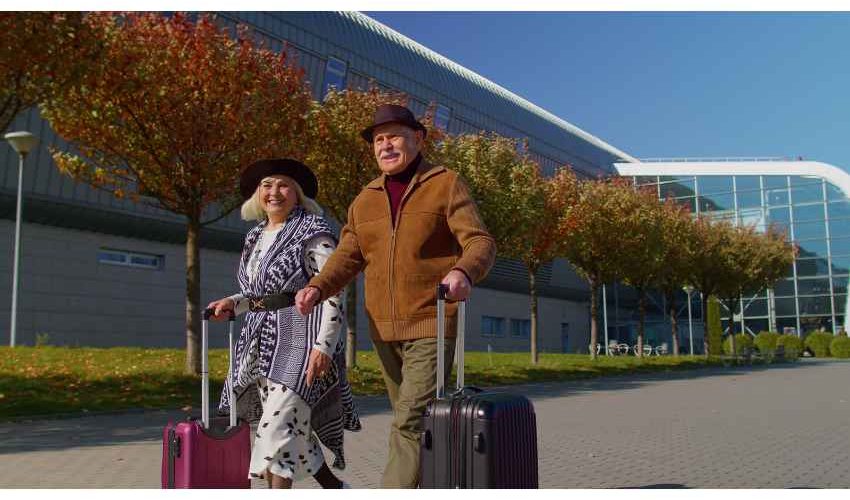
How Travel Can Support Wellbeing in Later Life
Travel may start to feel more challenging or more complicated in your 70s. However, that doesn’t mean you should cut out holidays completely. They can have a host of health-boosting benefits as well as enriching your yearly experience. Adapting your approach to holiday planning and preparing properly for each trip is the secret to enjoying travelling in your 70s and beyond.
Boosting Your Mood
The mood-boosting benefits of travel start before you’ve left home and increase as soon as you arrive somewhere new.
Planning and booking a trip triggers the brain’s reward circuit, releasing dopamine and serotonin. Stepping away from your daily routine gives your nervous system a chance to downshift and naturally grounds you in the present, lowering stress hormones like cortisol.
Travel can also create opportunities for meaningful social contact. You might spend uninterrupted time with your partner, visit family who live abroad or join a small-group tour where conversation about shared interests develops naturally during meals and daily excursions.
Even everyday interactions, such as chatting to someone at a local café, can make a trip feel sociable.
Keeping You Active
Travel often gets you moving even if exercise isn’t the focus of your day. When touring cities and sites, you may be walking for several hours, and you’re more likely to feel motivated to move.
That everyday movement is one of the best ways to support health in later life. Current NHS physical activity guidance for older adults recommends being active every day and, where appropriate, aiming for 150 minutes of moderate activity each week. It also advises doing activities that support strength, balance and flexibility at least twice a week – so why not include a gentle yoga session in your itinerary if that is possible?
Choose activities that suit your current mobility and fitness rather than measuring yourself against what you used to manage. A flat 30-minute waterfront walk, for example, may leave you feeling far better in the long run than pushing through a steep two-hour hike and spending the following day recovering.
Maintaining Mental Curiosity
An unfamiliar place gives your mind plenty to engage with. From navigating unfamiliar streets and languages to processing novel sights, smells and tastes, your brain is forced to switch on and, if necessary, build new neural pathways.
This neuroplasticity keeps your brain adaptable, supporting you in learning and retaining skills and maintaining mental health throughout life. In the short-term, it sparks creativity and cognitive refreshment, helping you return home happy and motivated.
You can enhance these mental benefits by preparing before you even leave home. Read about one aspect of your destination that genuinely interests you, whether that is local architecture, wildlife or food, then plan an experience around it.
Making Practical Arrangements
A little preparation can make travelling in your 70s feel much less demanding. Think about what you might find challenging, such as travel logistics, and book services to make those aspects smoother, like airport assistance or priority entry at attractions.
If you’re travelling with existing health conditions, ensure you have sufficient medication for your trip and a printout of your prescription you can carry with you. Check FCDO travel advice for your destination and your airline’s rules for carrying medication to ensure you’re not taking anything restricted.
Travel insurance can provide valuable financial protection in the event of trip cancellation due to a health problem or emergency treatment in-country. Choosing a tailored over 70 travel insurance policy can help ensure you have sufficient cover, including for any pre-existing conditions.
Always ensure you declare any medical conditions the insurer asks about accurately: reputable providers cover the majority of common conditions. Unfortunately, incomplete or incorrect information could invalidate your insurance should you need to make a claim.
Optimising Your Pace
Travel in your younger years might have been focused around ticking off sites and cramming experiences into every hour of the itinerary. One of the benefits of travelling in your 70s is you’ve normally got more time to travel, allowing you to slow your pace. In fact, leaving space in your itinerary can make the experiences you do choose more enjoyable.
Try alternating busier days with quieter ones. After a full-day excursion, you might spend the following morning reading by the pool before heading out for lunch. Choosing a centrally located hotel can also reduce long walks and repeated transfers.
Most importantly, let your energy dictate the pace. When you stop treating every free hour as something that needs filling, travel can feel less like an endurance test and more like what it should be: time well spent.