
Five cognitive exercises to help with a head injury’s recovery
Head injuries can be some of the most serious accidents and issues to go through, completely transforming lives in some cases and taking a large amount of rehabilitation before being able to live a ‘normal’ life. A big part of rehabilitation comes in the form of cognitive exercises to strengthen memory faculties and restore cognitive functioning as much as possible.
In some cases of brain injury, visiting a specialist facility or seeking permanent residence in a brain injury care facility may be necessary, while in others it could mean recovering and receiving brain injury care at home.
For those going through recovery at home, there are several exercises that carers can help with and improve the likes of memory, concentration and problem solving skills, all of which are valuable to a person’s head injury recovery. The following forms of cognitive exercises to strengthen memory faculties for those suffering from a brain injury may also be employed for other memory issues such as early stage dementia.
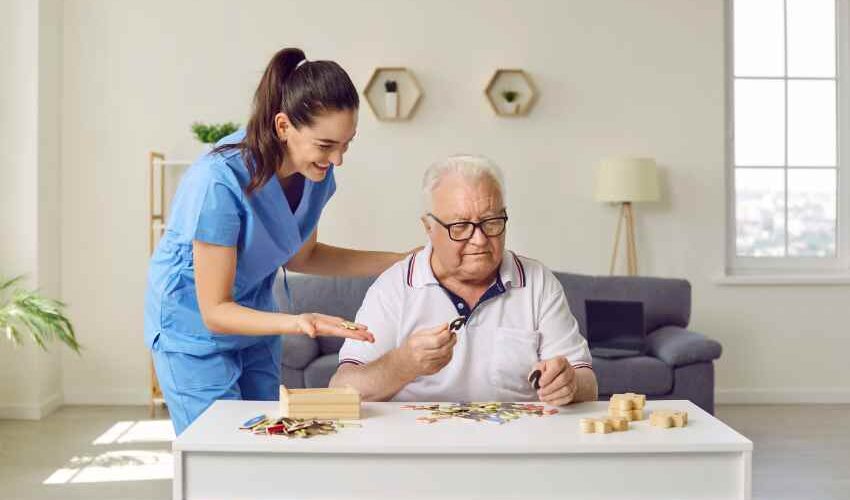
Memory Games and Puzzles
Many classic games like chess are incredibly beneficial to stimulating and improving cognitive functioning. They can challenge problem solving and strategic thinking, while card matching games are useful for memory.
Puzzles like sudoku and crosswords are excellent for problem solving again, as well as increasing concentration.
Mindfulness Meditation
Meditation is a key part of many forms of rehab, from injury to addiction, to battles with disease such as cancer.
Meditation is another good way of improving concentration and focus, while it’s also an incredible stress buster during what is a stressful and traumatic time in anybody’s life.
That could be going to classes or even finding sessions on YouTube, with some fantastic ones out there. Meditation encourages people to be more self aware as well as staying in the moment, which is important in the path to recovery.
Reading and Storytelling
Reading is also a great way to improve attention span, concentration and re-grasping the use of language, which can often suffer as a result of a brain injury.
Starting with shorter, simpler reads can be beneficial, gradually working your way towards more challenging reads as their cognitive functioning progresses.
What’s more, whether it be reading or writing stories, it allows people to be expressive, which can be a great outlet for those who have gone through a significant episode.
Cognitive Rehabilitation Apps
Interestingly, technology can be a real friend for people looking to rehabilitate after a head trauma, and there are several apps out there that are specifically designed to improve cognitive functioning.
Apps like Lumosity offer a range of games, brain training and cognitive exercises daily all structured to provide progress over time.
Not only are these fun to play, but they can stimulate various parts of the brain to improve memory, concentration, risk assessment, problem solving and reaction times.
Daily Living Tasks
Finally, putting day-to-day tasks back into practice is not only good for cognitive functioning, but independence and self-worth too.
Again, it’s about starting simple and rebuilding, so that could start with meal planning or organising schedules, and eventually move onto bigger real world challenges once comfortable.
It’s important to go at a pace that suits each individual, and always worth discussing such activities with a health professional to ensure it will be beneficial to the person’s progress.
However, just small activities each day can be extremely beneficial in the long run and help a person who has suffered a head injury get their life back on track as much as possible.